Inherited Weight: How Passed-Down Furniture Quietly Rewrote the American Interior
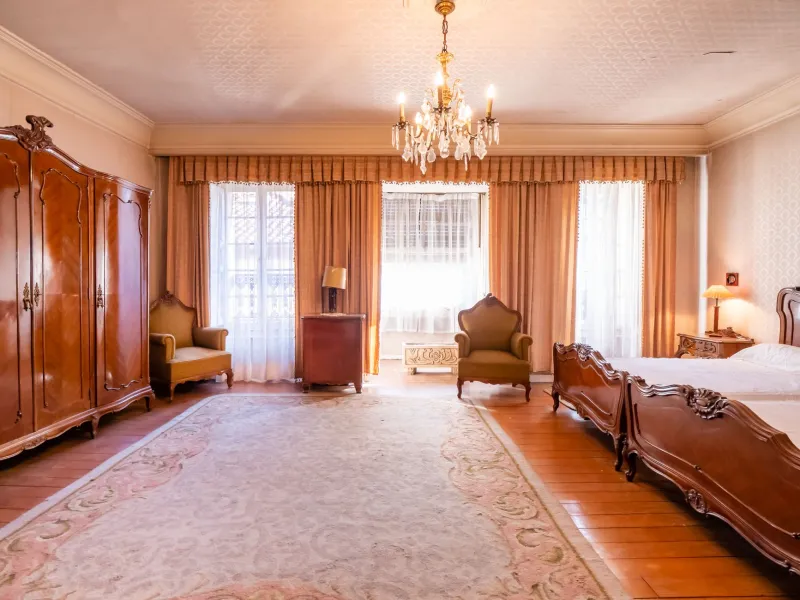
There is a particular kind of tension that arrives with a grandmother's armoire. It does not match the sofa. Its proportions belong to a different era, its finish darkened by decades of handling and light. And yet, in living rooms across the country, pieces exactly like it have remained — not as concessions to sentiment, but as deliberate choices that now define one of the more compelling shifts in American interior design philosophy.
Long before the language of sustainability entered the design conversation, American families were practicing a quieter form of preservation — keeping the furniture that came before them. The heirloom piece, once regarded as an obstacle to modern decorating, has emerged as one of the most powerful forces shaping the contemporary domestic interior.
The Age of Disposability and Its Discontents
To understand what inherited furniture is pushing against, one must first reckon with the culture it disrupted. The latter decades of the twentieth century produced an American interior defined by accessibility and uniformity. Flat-pack furniture, mass-market retailers, and the rise of big-box home furnishing stores democratized the domestic space in ways that were genuinely meaningful — but also introduced a logic of impermanence. Furniture became something one purchased for a phase of life, then replaced.
This disposability was not merely economic. It carried an aesthetic ideology: that the interior should be coordinated, contemporary, and free of contradiction. Inherited pieces, with their mismatched scales and period details, represented exactly the kind of contradiction this model sought to eliminate. They were the design equivalent of an unresolved sentence.
For a generation of Americans furnishing their first homes in the 1980s and 1990s, the path of least resistance was the showroom floor. The matched suite — sofa, loveseat, coffee table, all in the same family of materials — offered a coherence that felt modern and intentional. The grandmother's armoire, meanwhile, sat in storage or was quietly passed along to a thrift shop.
What the Armoire Survived
And yet, some pieces endured. The dining table built by a great-uncle, the secretary desk from a great-aunt's apartment, the rocking chair that had occupied three generations of front porches — these objects possessed a durability, both physical and emotional, that mass-produced furniture rarely matched. Their survival was not accidental. It reflected the effort that families made to accommodate them, to rearrange rooms, to repaint walls, to find some way to make the old and the new coexist.
This accommodation, repeated quietly across millions of households, began to produce something unexpected: a genuinely new domestic aesthetic. Not one derived from any single period or movement, but one assembled from the specific history of a particular family. The room that contained both a mid-century credenza and a Victorian side table was not confused — it was biographical.
Design scholars have noted that this layered quality, the sense of a room accumulated rather than purchased, is among the most difficult effects to manufacture deliberately. It requires time, which no showroom can sell.
Patina as Design Language
The shift in how Americans regard inherited furniture is also a shift in how they regard imperfection. The worn arm of a Windsor chair, the hairline crack in a marble-topped console, the faded upholstery of a wing chair that was already old when it was received — these marks of use have been reframed, in the contemporary interior, as evidence of value rather than decline.
This reframing did not happen in isolation. It coincided with broader cultural movements that placed a premium on authenticity, provenance, and the visible history of objects. The farm-to-table philosophy that reshaped American dining culture found a parallel in an interior design sensibility that might be described as attic-to-living-room: a preference for objects whose origins could be traced, whose surfaces told a story.
The concept of patina — long understood in antiques dealing as the accumulated surface quality that marks age — entered the mainstream design vocabulary with new authority. What had once been a reason to refinish a piece became a reason to preserve it exactly as found. The scratch, the worn finish, the replaced hardware that doesn't quite match: these became not flaws to be corrected but details to be honored.
The Mixed-Era Interior as American Statement
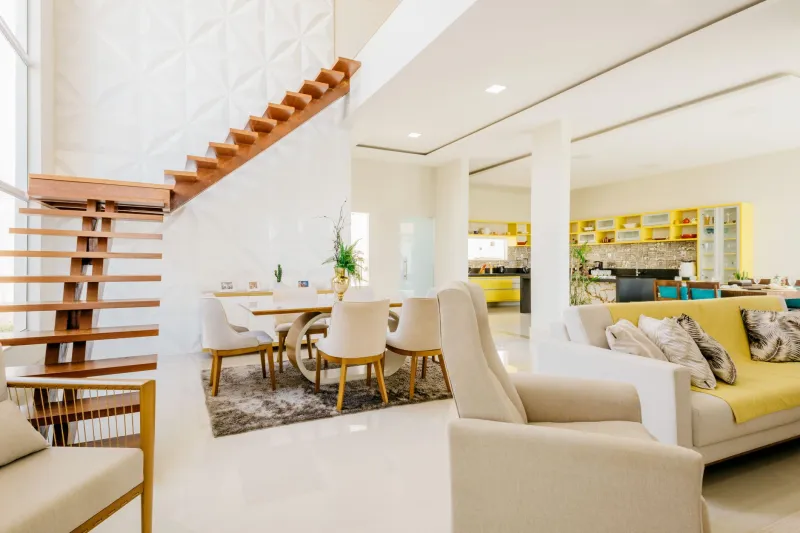
What has emerged from this collision of the inherited and the contemporary is an interior design sensibility that is distinctly American in its pragmatism and its pluralism. The mixed-era room — a space in which a nineteenth-century chest of drawers stands beside a contemporary sectional, where a 1960s Eames chair faces a farmhouse table that predates the Civil War — reflects the American tendency to assemble rather than inherit a single coherent tradition.
European interiors have long accommodated such layering, partly because the sheer age of available objects makes strict period consistency impractical. The American version of this layering carries a different charge. It is less about the casual accumulation of centuries and more about the deliberate negotiation between a family's material history and the present moment.
Interior designers working in the American market have noted a marked change in client conversations over the past two decades. Where earlier clients might have arrived with requests for rooms that felt entirely new, contemporary clients increasingly arrive with a specific inventory: the pieces they have inherited, the pieces they intend to keep, and the question of how to build a room around them rather than in spite of them.
The Heirloom's New Authority
This shift in the design conversation reflects something deeper than aesthetic preference. The heirloom piece has acquired a new kind of authority in the American interior — not the authority of rarity or monetary value, though those may apply, but the authority of continuity. In a domestic culture that has often privileged the new, the inherited object represents a counter-argument: that some things are worth keeping, that a room can hold both the present and the past without contradiction.
The furniture that stayed — the pieces that survived storage units and estate sales and the periodic impulse to start fresh — has, in staying, made a claim on the American interior that no catalog item could replicate. It has introduced a dimension that the disposable model of furnishing was never equipped to provide: the sense that a room belongs not only to the people who currently occupy it, but to those who came before.
That armoire still does not match the sofa. In the contemporary American interior, that is precisely the point.