The Bed That Waits: America's Guest Room and the Cost of Good Intentions

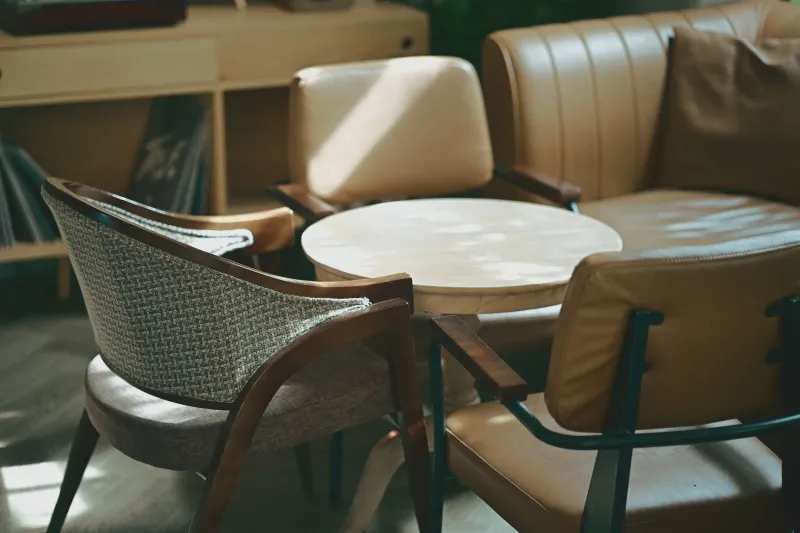
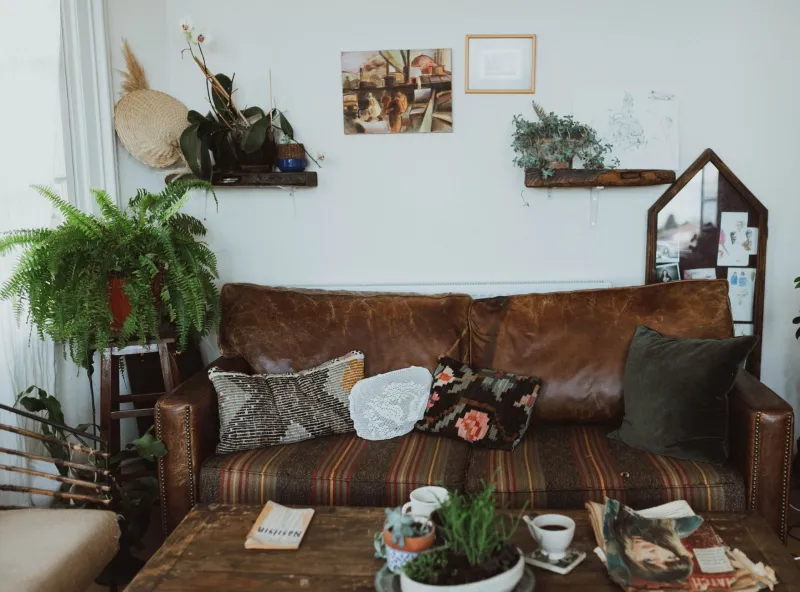
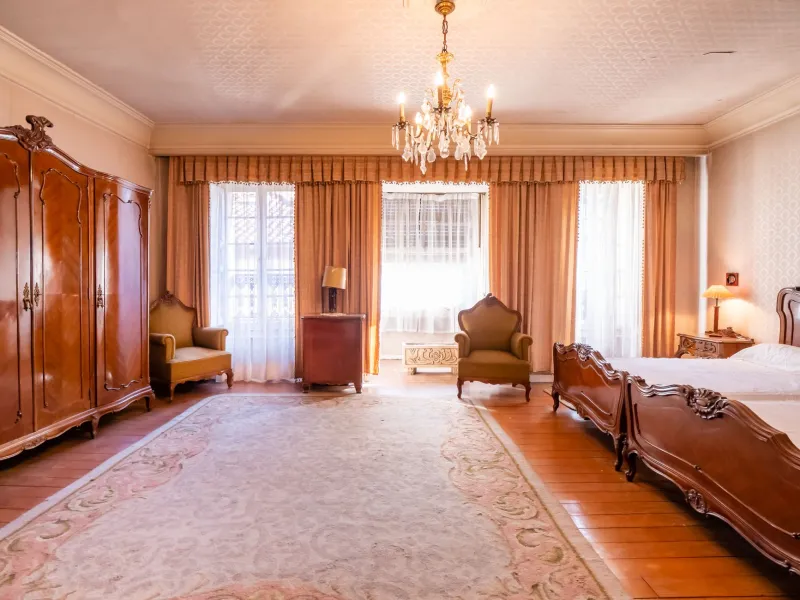
Photo: spare bedroom guest room with neutral bedding unused and tidy, via f.ptcdn.info
There is a particular kind of American room that exists almost entirely in the future tense. It has a bed with a duvet pulled taut, two pillows arranged at an angle that suggests recent attention, a nightstand with a lamp and nothing to read, and a closet containing three spare blankets and someone's out-of-season coats. It is called the guest room, and its occupant is almost never there.
This is not a failure of design. It is a design brief written for an imagined visitor, and it is worth asking, plainly, what that brief has cost.
The Promise in the Spare Room
The guest room is a moral proposition before it is a spatial one. To keep a room ready is to say that the household is open, that distance can be closed, that a relative from Ohio or a college friend passing through has a place. The made bed functions as a standing offer. Unmade, it would be an admission that no one is expected.
In this sense the spare room belongs to an older American tradition of hospitality that treated the arrival of company as an event requiring preparation — the good sheets, the aired-out room, the practical welcome. What changed is that the preparation became permanent, and the room became a room only in theory.
A Short History of the Company Bed
Before the twentieth century, most households did not have a room to hold in reserve. Guests slept in parlors on folding beds, in alcoves, in the same rooms as children. The Murphy bed, patented in the early 1900s and popularized in apartment living, was an explicit acknowledgment that hospitality and floor area were in conflict.
Postwar suburban construction resolved the conflict by adding rooms. The three-bedroom ranch allocated one to the parents, one to the children, and one to a flexible category that drifted toward the guest. By the 1980s the guest room had become a standard feature of middle-class expectation — a marker of having arrived at enough square footage to be generous with it.
When the Spare Room Became Real Estate
That expectation held while housing was, by historical standards, cheap. It has become harder to sustain. In expensive metropolitan markets, the second or third bedroom is no longer a neutral asset; it is a significant line item in a mortgage, priced against rent that a lodger could pay or against the value of a home office that produces income.
Remote work forced the question. A household that once kept a bed made for a twice-yearly visit now needs a door that closes on a desk, a monitor, and a video call. The guest room did not disappear; it became contested, doubling as an office that must be hastily converted whenever someone announces a visit. The result is a room that is never quite either thing — a desk surrounded by bed, a bed surrounded by cables.
Short-term rentals added a second pressure, turning the unused bedroom into a potential revenue stream and, in some households, into a moral argument about waste.
Designing for Someone Who Is Not Coming
The deeper problem is aesthetic. A room designed for a hypothetical occupant tends toward the anonymous. Neutral bedding, a single framed print, a lamp of adequate but unremarkable quality, curtains chosen for privacy rather than pleasure. It is a hotel room without the hotel's discipline, and it produces a space that neither the guest nor the household particularly enjoys.
The guest, for the record, rarely benefits. A visitor sleeping in a room furnished from leftovers — the inherited dresser, the mattress that was replaced in the primary bedroom, the chair nobody wanted — is being housed, not hosted. Hospitality performed through sacrifice of quality is a form of politeness that everyone notices and no one mentions.
And the household pays daily. The room consumes heat, collects dust, and absorbs the storage overflow that every house generates. It occupies, in a well-used home, the square footage that could hold a library, a studio, a genuinely comfortable second living space, or a workplace that does not require dismantling before dinner.
An Honest Inventory
The case against the guest room is not a case against guests. It is a case for honesty about frequency. A room used twelve nights a year is, for the other 353, a room the household is not allowed to enjoy — held in a state of readiness that reads, on inspection, as a kind of suspended animation.
Some households have begun to say so out loud. The convertible study, the daybed in a den, the properly designed fold-out in a room that otherwise earns its keep: these are not compromises so much as corrections. They accept that hospitality is episodic and that a room can be generous without being empty.
The made bed is a lovely gesture. It is also, in a great many American houses, the most expensive unused object in the building — a promise kept to no one in particular, at the cost of a room that might otherwise have been lived in.