Against Coherence: The American Home's Deliberate Embrace of Furniture That Refuses to Agree
For much of the twentieth century, American domestic taste aspired to a kind of visual consensus—rooms where every piece acknowledged every other piece in a language of shared period, finish, and proportion. Bedroom suites arrived as sets. Dining rooms were purchased complete, from table to hutch, in a single transaction that foreclosed the possibility of improvisation. The matched interior was not merely an aesthetic preference; it was, in many households, a measure of seriousness, of arrival, of having assembled a life with sufficient intention to make all its furnishings agree.
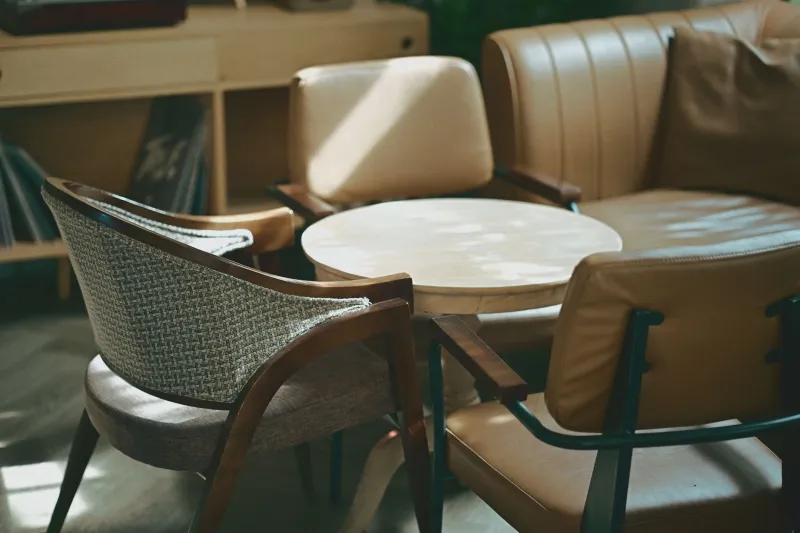
That consensus has since collapsed. In its place has emerged something far more revealing: the deliberately assembled interior, where a Danish credenza from 1962 stands beneath a Victorian mirror and neither apologizes for the company it keeps.
The Matched Room and Its Discontents
To understand what changed, it is worth pausing on what the matched interior actually represented. Department store furniture floors of the 1950s and 1960s sold rooms, not pieces. Ethan Allen and Broyhill offered consumers a complete visual grammar—a promise that the home, once furnished, would present a unified face to the world. This unity was aspirational in a specific, postwar sense: it suggested prosperity achieved, taste confirmed, domestic life successfully organized.
The anxiety embedded in such arrangements was, of course, considerable. A room that matched required ongoing vigilance. A single inherited armchair in a conflicting style became a problem to be solved rather than a story to be told. The matched aesthetic was, by its nature, inhospitable to accumulation, to history, to the kind of slow layering that characterizes a genuinely lived-in space.
By the late 1990s, that inhospitability was beginning to register as a liability.
IKEA and the Permission to Begin Incompletely
The early 2000s introduced a new domestic logic, one in which the furnished room was understood as a starting point rather than a destination. IKEA, then expanding aggressively across American markets, offered something the department store model had never quite provided: affordable pieces that were explicitly designed to be supplemented, replaced, and combined without anxiety. The Billy bookcase did not demand a matching sofa. The Poäng chair made no claims about the dining table.
This modularity was not, in itself, an invitation to eclecticism—IKEA's aesthetic was resolutely Scandinavian and spare, oriented toward a minimalism that substituted coordination for coherence. But the underlying permission was significant. American consumers were learning to furnish their homes incrementally, to live with rooms that were incomplete, to resist the pressure of the comprehensive purchase.
The cultural effects of this shift were not immediately visible in the rooms themselves. They became visible, instead, in the growing tolerance for furniture that arrived from different places and different eras.
The Vintage Market as Interior Autobiography
The democratization of vintage furniture access transformed the conditions under which Americans assembled their domestic environments. Estate sales, once the province of dedicated antiquarians, became weekend leisure activities for a broad middle class. Platforms like Craigslist and, later, Facebook Marketplace and Chairish made the acquisition of secondhand furniture not merely accessible but convenient. A mid-century modern lamp discovered at a Memphis estate sale could be purchased, shipped, and positioned beside a contemporary sofa within a week.
What these markets offered was not simply affordability, though price was certainly a factor. They offered provenance—or at least the suggestion of it. A piece acquired through the vintage market arrived with the implication of a history, however unverifiable. It had belonged to someone. It had occupied another room, another life. Bringing it into one's own home was an act of minor archaeology, a decision to make one's interior a record of encounters rather than a product of a single purchasing occasion.
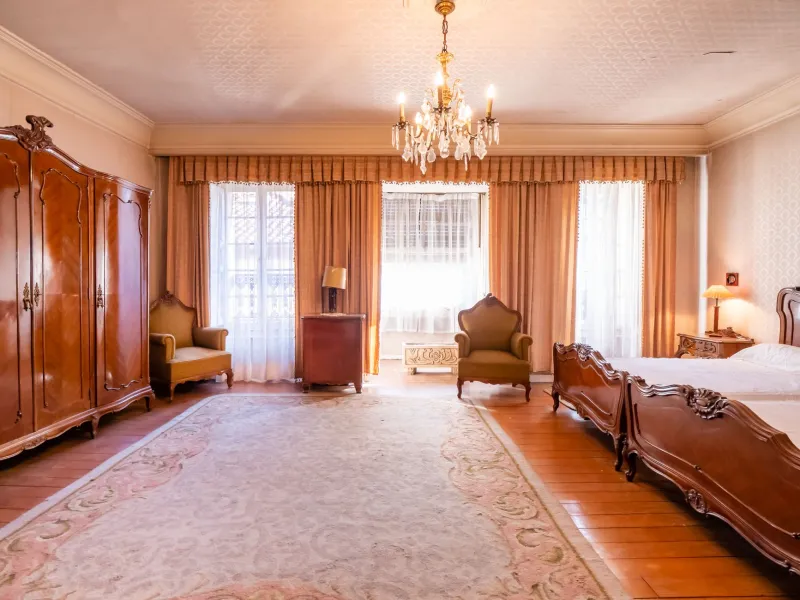
This shift from acquisition to collection fundamentally altered the relationship between furniture and architectural context. A room assembled through collection was not expected to match its own walls. The Victorian parlor chair placed in a 1970s ranch house was not a mistake; it was a statement about the resident's range of reference, their willingness to hold multiple historical moments in a single domestic space.
Rental Culture and the Loosening of Architectural Loyalty
The rise of extended rental culture among younger Americans further eroded the expectation that furniture should correspond to its architectural surroundings. When a significant portion of the adult population moves between apartments every few years—inhabiting spaces with varying ceiling heights, floor materials, and period details—the furniture that travels with them necessarily develops a certain architectural indifference. A velvet chesterfield sofa that looked entirely appropriate in a prewar Upper West Side apartment is carried, without modification, into a glass-and-steel high-rise in Phoenix. The sofa does not change. The expectation that it should is simply abandoned.
This portability has produced a generation of American furniture owners whose pieces carry histories of multiple architectural contexts. The result is an interior sensibility that is less concerned with harmony between furniture and structure than with the internal coherence of the furniture collection itself—a coherence based not on period or style but on personal selection, on the logic of a single sensibility operating across many years and many moves.
Instagram and the Aestheticization of Contradiction
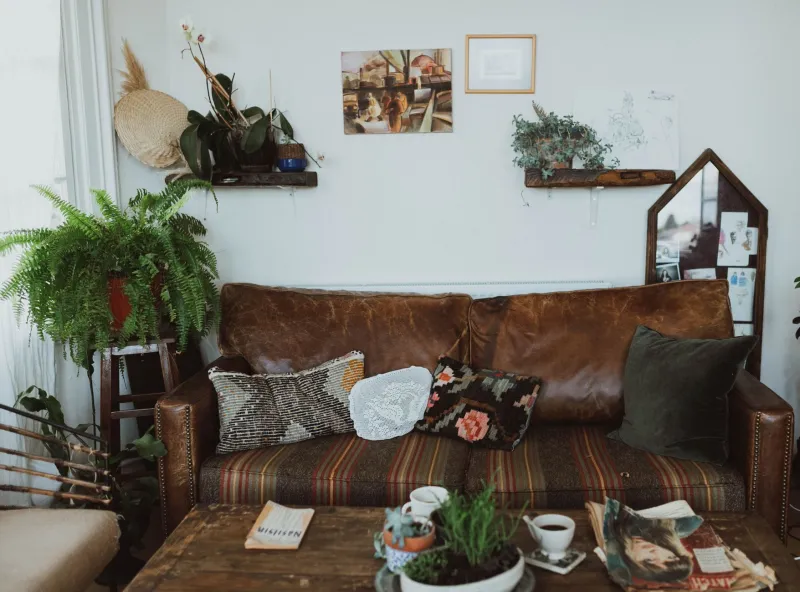
If rental culture loosened the expectation of architectural correspondence, social media aestheticized the loosening itself. The interiors that circulated most effectively on Instagram and Pinterest in the 2010s were not matched rooms but curated assemblages—spaces that combined contemporary art with Victorian furniture, industrial lighting with Persian rugs, brutalist concrete with delicate antique textiles. The contradiction was not incidental; it was compositional. The juxtaposition was the point.
This visual culture produced a new domestic literacy, one in which the ability to combine disparate elements with apparent effortlessness became a marker of sophisticated taste. The matched room, once the emblem of domestic achievement, came to read as a failure of imagination—evidence that a homeowner had purchased rather than curated, had followed instructions rather than exercised judgment.
The maximalist interiors that rose to cultural prominence in the early 2020s carried this logic to its furthest expression. Rooms layered with pattern, period, and provenance made their eclecticism not merely acceptable but exemplary. The more a space appeared to have accumulated over time—through inheritance, travel, discovery, and deliberate acquisition—the more it seemed to testify to the richness of its inhabitant's inner life.
What the Contradiction Confesses
There is, beneath the aesthetic argument, a cultural argument worth attending to. The matched interior of the postwar era expressed a desire for consensus, for belonging to a shared domestic language that transcended individual history. The eclectic interior of the present moment expresses something quite different: a desire to be legible as a particular person, with particular experiences, particular loyalties, particular aesthetic encounters that no catalog could have assembled on one's behalf.
The furniture that refuses to match its house is, in this reading, furniture that insists on its owner's specificity. The Victorian chair in the ranch house is not a decorating error. It is a declaration that the room belongs to someone whose imagination exceeds their architecture—someone who has been somewhere, found something, and chosen to live with the evidence.
That choice, multiplied across millions of American homes, constitutes one of the more quietly significant cultural shifts in the history of domestic life. The room that agrees with itself has given way to the room that agrees with its inhabitant. Whether that represents a gain in authenticity or simply a more sophisticated form of aspiration is a question the rooms themselves cannot answer—but they raise it, with considerable eloquence, every time a piece that refuses to belong insists, nonetheless, on staying.