A Table for Occasions: The Formal Dining Room's Improbable Afterlife
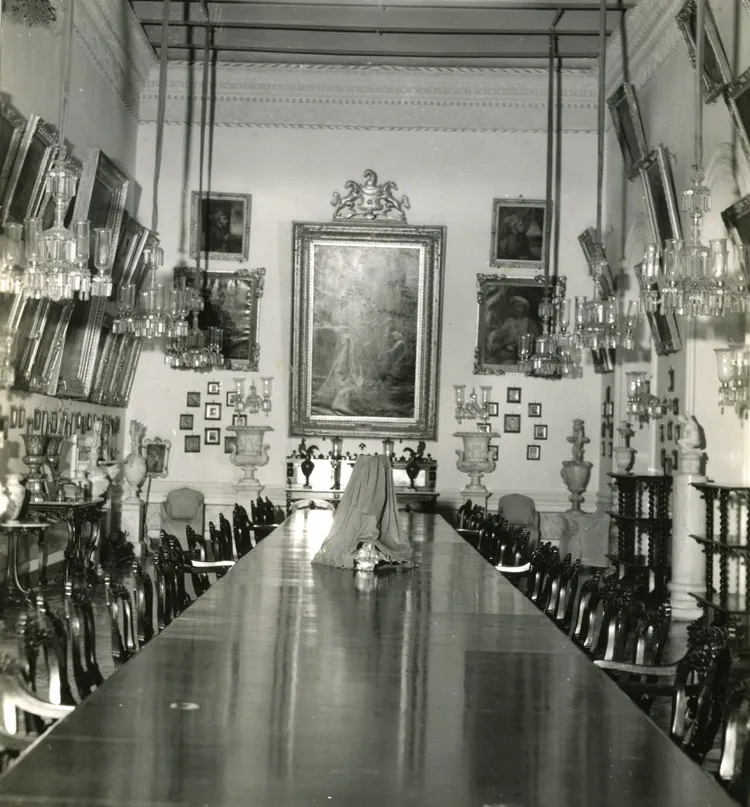
Photo: Frank Bond, Public domain, via Wikimedia Commons
Few rooms in the American house have been declared dead as often as the formal dining room. Mid-century planners, open-plan evangelists, and real-estate pragmatists have all predicted its disappearance. Yet the room persists—sometimes as a table set for no one, sometimes as a home office with a chandelier, sometimes as a holiday stage that justifies the square footage. The dining room has not survived by staying the same. It has survived by becoming flexible.
The Room That Was Supposed to Disappear
The Victorian dining room was a room of sequence and service. It separated the act of eating from the act of cooking, and it separated the family from the hired help who carried the dishes. Its formality was not merely decorative; it was a spatial arrangement of labor and class. As servants declined and domestic work changed, the room lost its supporting cast. The open-plan movement of the postwar decades proposed that eating could happen anywhere—at a kitchen counter, in a breakfast nook, on a sofa in front of the television.
For a time, the prediction seemed correct. The formal dining room shrank or vanished in many new houses. Builders offered great rooms instead, with a dining table pushed against a wall. Design magazines celebrated the death of the unused room. But the room did not vanish. It moved, adapted, and learned to share its identity with other activities.
The Holiday Stage
For many American families, the dining room is used intensely but infrequently. Thanksgiving, Christmas, Passover, Easter, graduations, and funerals give the room its calendar. On ordinary days it may hold mail, schoolwork, or a laptop. On ritual days it becomes the one room where the house performs continuity. The good plates come out. The table is extended. The chandelier is dusted. The room justifies itself in a single afternoon.
This pattern is not a failure of design. It is a different model of use. The dining room is not a daily room; it is a room of occasions. Its emptiness between occasions is not evidence of uselessness. It is a kind of storage for ritual readiness.
Flex Space by Another Name
Real-estate listings have become adept at describing the room's double life: formal dining room, home office, playroom, music room. The language is not merely marketing; it reflects how households actually use space. A dining table is a desk, a craft surface, a puzzle board, and a buffet. The room can be closed off for a meeting or opened up for a party. It can hold the good china and the printer.
In this sense, the dining room has joined the broader American trend toward rooms that refuse a single job. The home office, the guest room, and the playroom have all become shape-shifters. The dining room simply had a head start. Its formal identity gave it a certain dignity that made it easier to repurpose without apology.
The Real Estate Alibi
Even buyers who do not expect to use a formal dining room often want one, or want the option. The room functions as an alibi for aspiration. It promises that the household can still host, still gather, still observe a ritual. It is a stage set for a life that may only occur a few times a year, but those few times matter.
This is why the room survives in resale language even when it disappears from daily life. It signals a certain kind of house: one with enough space to separate the everyday from the ceremonial. The dining room is not merely square footage. It is a claim about the household's capacity for occasion.
What Ritual Requires
The dining room's persistence suggests that Americans have not abandoned formality so much as relocated it. Formality now lives in occasions rather than in daily manners. The room is a container for the possibility of ceremony. It may be quiet for most of the year, but it is not empty. It is waiting.
That waiting is the point. A table set for no one is still a promise. The dining room survives because Americans still want a place where the ordinary rules can be suspended—where a meal can become an event, and a room can become a stage.