From Hidden Chore to Considered Room: The Cultural Reinvention of the American Laundry Space

Photo by Photo by Lisa Anna on Unsplash on Unsplash
The laundry room has long occupied the least glamorous corner of the American home — tucked behind a door, stripped of ornament, and treated as a necessary concession to domestic reality rather than a space worthy of design attention. That consensus has shifted with striking speed. What was once the most deliberately overlooked room in the house is now, for a significant segment of American homeowners, a primary site of design investment. The transformation raises questions that go well beyond tile selection and cabinet hardware. It asks, more fundamentally, why certain domestic spaces earn cultural legitimacy when they do — and what that timing reveals about the society doing the valuing.
The Basement Exiled: Origins of the Hidden Laundry
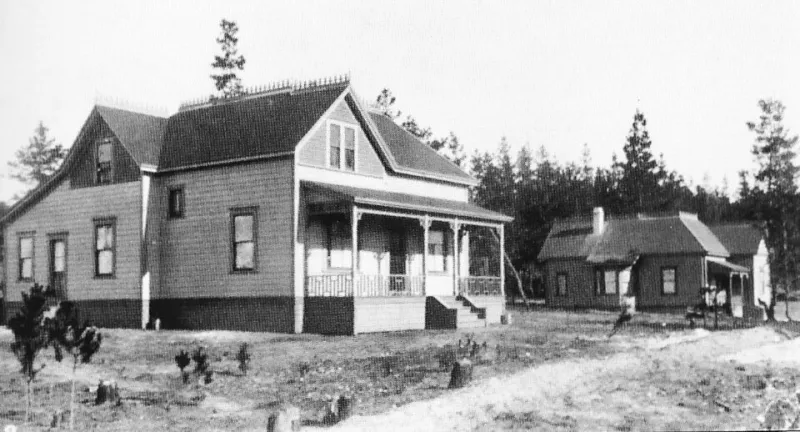
For much of American domestic history, laundry was not a room so much as a condition — a state of labor that moved through the house and eventually settled wherever it caused the least disruption to visible life. In the nineteenth and early twentieth centuries, washing took place in the kitchen, in a dedicated outbuilding, or in the basement, where heat, steam, and the physical demands of hand-washing could be contained and concealed.
The arrival of the electric washing machine in the early twentieth century began to formalize the laundry space, but it did not immediately dignify it. Machines were placed wherever plumbing and electrical access permitted — frequently the basement, occasionally a converted porch, sometimes a narrow closet off the kitchen. The governing principle was proximity to utility connections, not proximity to comfort or light. The laundry room was designed to function, and function alone was considered sufficient.
This utilitarian logic persisted through the postwar suburban boom. In the ranch houses and split-levels that defined American residential development through the 1950s and 1960s, the laundry was typically located in the garage, the basement, or a small utility room adjacent to the kitchen. It received linoleum flooring, a utility sink, and whatever wall space remained after the mechanical equipment had been installed. No designer was consulted. No aesthetic consideration was applied. The room existed to process dirty clothing, and its appearance reflected that limited mandate.
The Domestic Interior Turns Inward: Wellness, Work, and the Reassessment of Utility Spaces
The cultural conditions that have elevated the laundry room to its current prominence are multiple and intertwined. Among the most significant is the broad shift in American domestic culture toward what might be called the aestheticization of daily function — the idea that the routines of household maintenance deserve environments that support rather than diminish the people performing them.
This shift did not originate with the laundry room. It manifested first in the kitchen, which spent the latter decades of the twentieth century transforming from a workplace into a social center. It appeared in the bathroom, which evolved from a hygienic necessity into a personal retreat. The laundry room represents the latest frontier in this ongoing reassessment of which domestic spaces merit investment and attention.
The expansion of remote work, accelerated dramatically by the events of 2020, contributed meaningfully to this process. When the home became simultaneously a workplace, a school, a social venue, and a retreat, homeowners began to experience their domestic environments with unusual intensity and duration. Spaces that had previously been visited briefly and exited quickly were now encountered repeatedly throughout the day. The laundry room, always present but rarely considered, became suddenly conspicuous in its inadequacy.
Mental health discourse has reinforced this tendency. The concept of environmental psychology — the understanding that physical surroundings exert measurable influence on mood, stress levels, and cognitive function — has entered mainstream American conversation in ways that would have seemed specialized a generation ago. Homeowners now discuss the psychological burden of disorganized or aesthetically neglected spaces with a fluency that reflects genuine cultural absorption of these ideas. The laundry room, long tolerated as a site of visual disorder, became a candidate for reconsideration.
The Image Economy and the Aspirational Utility Room
No account of the laundry room's reinvention would be complete without acknowledging the role of social media in reshaping domestic aspiration. Image-sharing platforms have created an economy of domestic display in which previously unphotographed spaces are now regularly staged, curated, and shared. The laundry room — with its clean lines, organizational possibilities, and photogenic combination of cabinetry, tile, and hardware — proved unexpectedly well-suited to this format.
The visual language that emerged for the designed laundry room drew on several established aesthetic traditions. Shaker-style cabinetry painted in soft, muted tones. Subway tile or zellige in white, cream, or sage. Open shelving stocked with uniform glass vessels containing detergent and softener. Brass or matte black hardware. A farmhouse sink. Patterned cement tile on the floor. These elements, individually familiar from kitchen and bathroom design, assembled into a coherent vocabulary for the elevated utility space.
Appliance manufacturers responded to and amplified this shift. Premium washer and dryer sets, offered in colors ranging from cobalt blue to matte white, were marketed not as mechanical necessities but as design objects — a framing that would have seemed eccentric a decade earlier but aligned naturally with the broader cultural moment. The laundry room was no longer a space to hide the machines; it was a space to display them.
Historical Precedents: The Pattern of the Undervalued Room
The laundry room's ascent follows a pattern that students of domestic history will recognize. The American kitchen spent much of the nineteenth century as a space of invisible labor before its twentieth-century transformation into the social and aesthetic heart of the home. The bathroom, regarded through much of American history as a medical necessity barely distinguishable from plumbing infrastructure, became by the end of the twentieth century a room that homeowners would spend tens of thousands of dollars to renovate.
In each case, the transformation was driven by a convergence of cultural, economic, and technological forces that made the elevation of these spaces newly legible and newly desirable. The laundry room appears to be following the same trajectory, approximately a generation behind the bathroom in its progress from utilitarian afterthought to designed environment.
What distinguishes the current moment is the speed of that transformation. Where the kitchen's reinvention unfolded across decades, the laundry room's redesign has accelerated through the compressed time of digital culture, moving from fringe aspiration to mainstream expectation within a relatively brief period.
The Room Reconsidered
The designed laundry room is, at its core, an argument about the value of labor — specifically, the domestic labor that has historically been performed by women and systematically excluded from the design attention lavished on more public or more masculine spaces. To invest in the aesthetic quality of a room dedicated to washing and folding is to insist, however implicitly, that the work performed there deserves better surroundings.
This is not a trivial claim. The history of domestic interiors is substantially a history of which activities were considered worthy of beautiful rooms and which were not. The laundry room's current cultural prominence represents a quiet but meaningful revision of that hierarchy — a recognition that utility and beauty are not, in fact, incompatible, and that the rooms in which we perform the most repetitive and necessary work may be precisely the ones most deserving of care.
In the Museum of Interiors, the laundry room would be displayed not as a curiosity but as evidence — a room whose recent transformation illuminates, with unusual clarity, the ongoing negotiation between function and meaning that has always defined the American domestic interior.