The Room That Received No One: America's Farewell to the Formal Parlor
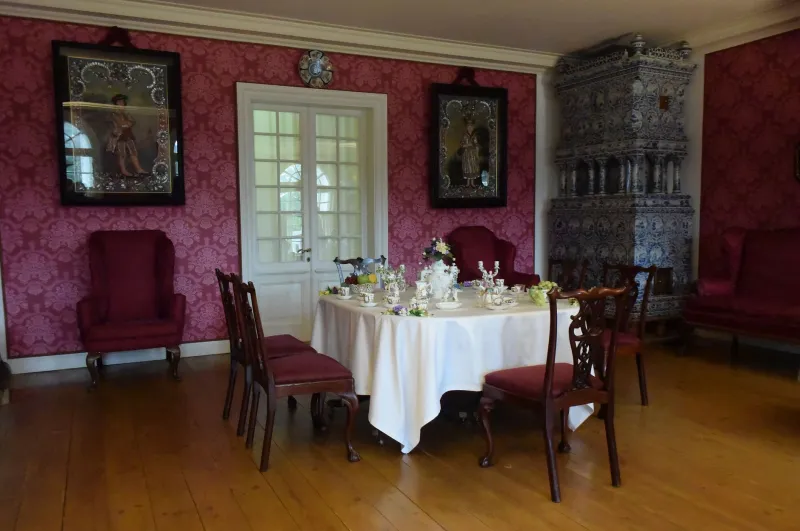
There is a particular kind of silence that once belonged exclusively to the front room of the American house. Not the silence of neglect, but of anticipation — the hush of a space kept in constant readiness for company that might never arrive. Furniture arranged with deliberate precision. Curtains drawn just so against the afternoon light. A room, in essence, that existed not for the family who owned it but for the world that occasionally passed through it.
That room was the parlor. And it is, for all practical purposes, gone.
A Stage Before It Was a Living Room
The Victorian parlor — dominant in American domestic architecture from roughly the 1840s through the early twentieth century — was never intended to be comfortable in the casual sense. Its function was ceremonial. It received guests, hosted courtship, displayed the family's material achievements, and, in an era before funeral homes became standard, often held the bodies of the recently deceased. The parlor was the household's public face, as deliberately composed as any portrait.
Furniture in these spaces was typically upholstered in fabrics too fine for daily use. Whatnot shelves displayed china, photographs, and imported curiosities. The piano, if the family could afford one, occupied a prominent corner — less an instrument of private pleasure than a declaration of cultivation. Every object communicated something about the family's standing, values, and aspirations to anyone who crossed the threshold.
Design historians note that the parlor operated as a form of social currency. In a society without credit scores or LinkedIn profiles, the front room was among the few spaces where a family could make a legible argument for its own respectability.
The Undertaker's Unwitting Contribution
The decline of the parlor began not with an architect but with an industry. As professional funeral homes proliferated across American cities and towns in the early twentieth century, the domestic parlor lost one of its most significant ritual functions. The word itself became tainted by association; home decorating publications and real estate listings began deliberately substituting the phrase "living room" — a term that carried warmth, informality, and the suggestion of actual habitation.
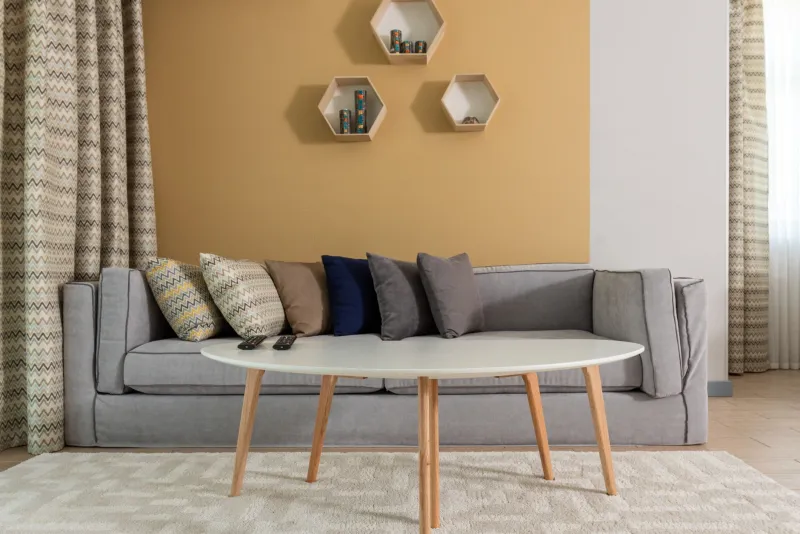
The shift in nomenclature was not trivial. "Living room" implied that people lived there, that the space belonged to the family rather than to social performance. It was a quiet but consequential redefinition of what the front room of an American home was supposed to do.
Along with the rebranding came architectural reconfiguration. Craftsman bungalows, which swept the country in the 1910s and 1920s, dissolved the hard boundary between parlor and dining room. The inglenook replaced the formal mantelpiece arrangement. Spaces became warmer, lower-ceilinged, more intimate — and the rigid choreography of the Victorian front room began to loosen.
Postwar Informality and the Casual Turn
By the time American soldiers returned home after World War II, the formal parlor was already a relic in most middle-class households. The postwar suburban boom produced homes designed around a new domestic ideology: the family as a unit of leisure rather than a unit of social performance. The living room became a place for the television set, the sectional sofa, and the organized chaos of children.
The entertaining habits that had once required a dedicated formal space migrated outward — to patios, backyards, and the newly celebrated "family room" that proliferated in ranch houses and split-levels across the Sun Belt and the suburbs of the Northeast. When Americans entertained, they did so informally, and the architecture of their homes reflected that preference with remarkable speed.
The formal living room persisted in upper-middle-class and wealthy homes through the latter decades of the twentieth century, but increasingly it functioned as a museum within a museum — a room furnished with care and entered rarely, maintained more out of habit than genuine social necessity.
The Open-Concept Dissolution
The final architectural blow came with the open-concept revolution of the 1990s and 2000s. Walls between kitchen, dining area, and living space were demolished with evangelical fervor. Real estate listings celebrated "flow." Television renovation programs treated load-bearing walls as obstacles to a more enlightened way of living. The home, in this vision, was a single continuous space where the family gathered without hierarchy or partition.
Open-concept design solved certain real problems — it made smaller homes feel larger, allowed parents to supervise children while cooking, and suited the more egalitarian social habits of contemporary American life. But it also eliminated the possibility of the kind of room the parlor once represented: a space held in reserve, calibrated for specific social occasions, and deliberately separate from the rhythms of daily domestic life.
Some designers and architects have begun to question whether this dissolution came at a cost. Without a room designated for formal reception, the American home lost a spatial mechanism for distinguishing between the intimate and the public, between family life and social life. Every guest who enters an open-concept home now sees the breakfast dishes, the mail piled on the counter, the evidence of actual living. The carefully maintained threshold between private self and public presentation has been architecturally removed.
What the Parlor Actually Did
To dismiss the parlor as mere pretension is to misread its function. The room served as a container for social anxiety — a place where the performance of respectability could be isolated, managed, and contained, leaving the rest of the home free from that particular pressure. It gave families a defined space in which to receive strangers, conduct formal business, and mark significant transitions: engagements, condolences, celebrations.
More subtly, the parlor provided a room that was nobody's room in particular — not claimed by any individual family member, not optimized for any single daily function. It existed as a kind of shared civic space within the private home, governed by collective rather than individual use.
The disappearance of that spatial logic has not made American homes more honest, exactly. It has simply relocated the performance. We now stage our domestic lives through Instagram grids, Zillow listing photographs, and the curated disorder of open shelving. The impulse to present a composed version of the household to an audience has not diminished; it has migrated from the front room to the digital feed.
A Room Worth Reconsidering
There is a small but growing contingent of architects and homeowners who are quietly returning to the idea of the designated formal space — not the Victorian parlor in its full ceremonial severity, but something that recovers its essential logic: a room apart, held to a different standard, reserved for encounters that deserve a particular kind of attention.
Whether this constitutes a genuine design movement or simply a reaction to the relentless informality of contemporary life remains to be seen. But the question the parlor poses is one that open-concept living has not resolved. It asks, with the patience of a room kept always in readiness: what kind of space do we need in order to receive one another well?
The answer, it turns out, may require a door.